


Pianos are delicate instruments, and the older your piano is, the gentler you need to be with it. This is especially important while performing repairs or tuning, because the last thing you want to do is make a problem worse when your piano keys are already sticking or the interior is already making strange sounds. This raises the obvious question of what to do when your piano is already old and requires more extensive restoration work.
Restoring a piano to its former glory requires practiced and diligent hands. Trying to do it yourself can result in mistakes that turn a neglected instrument into a broken heirloom. That’s why you need a skilled professional who specializes in antique pianos and can tell you what your piano needs.
Whether to Restore or Rebuild
Some vintage pianos have enough life left in them that restoring them only requires some improvements to the existing parts. Pianos have long lifespans before extensive repairs become necessary, and in some cases, your piano just needs some polish and a few adjustments to start performing up to its potential again.
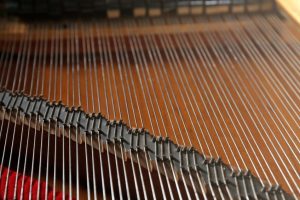
Some pianos are so old and have fallen into such disuse that their inner workings need to be replaced. Strings can rust or snap with age. Tuning pins can slip due to pinblock damage over time from use and exposure to environmental threats like humidity. Even the cast iron plate can crack due to mishandling during transportation and prolonged improper string tension. Damage this extensive may warrant a rebuild, which is costlier and more time-intensive than the typical restoration. An experienced professional can advise you on which option is best for you.
Restoring the Inner Components
The most common issues a vintage piano might experience involve its inner workings. Unresponsive keys, worn strings, and sound quality degradation are relatively easy to diagnose, and since a piano contains 12,000 parts working together, a problem with one component can easily contribute to issues in other areas.
An experienced piano repair professional can remove and replace old strings that are no longer working quite as well as they should be. Old pinblocks can be taken out and new ones can be inserted so that the tuning pins will fit correctly. It all depends on where the problem areas are and how deep the damage goes.
The Cast Iron Plate
The cast iron plate is the heaviest singular piece in a piano’s overall structure and comprises most of its mass. The weight is a necessary quality that allows it to withstand the combined force of 230 strings on average, and although damage to the plate is unlikely unless the piano suffers a fall during transportation, it does collect dust and other debris over time. This accumulation can affect any number of your piano’s other components.
For this reason, the cast iron plate will require periodic cleaning. As with most maintenance tasks, especially for older pianos, this work is best left to a trained professional equipped with the knowledge and tools to do it precisely and without the use of harsh chemicals.
Piano Tom can work with vintage piano owners throughout the Seattle area by examining your instrument, advising you on whether it should be restored, repaired, or rebuilt, and performing the work with a trained and steady hand. Contact us at (425) 462-1101 or visit our website to learn more.
Leave a Reply