


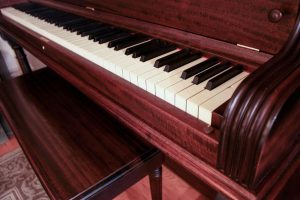
No piano lasts forever. Whether the parts degrade under the unstoppable march of time, or they simply experience the wear and tear of regular use, they will always require maintenance and repairs. If a piano is neglected for too long, playing it again might even require a rebuild, which is more labor-intensive and time-consuming.
Different types of pianos have characteristics that contribute to increased longevity. All these factors together will make the difference between a piano that lasts a century or longer and a piano that needs extensive repairs after only a few decades. While grand pianos tend to last the longest without the need for rebuilds, quality of care is paramount.
Regular Cleaning Can Prolong the Life of Your Keys
It goes without saying that clean piano keys perform better. Dust and humidity are environmental factors that can make keys stiff, which not only dampens sound quality, but also increases strain on the instrument’s inner workings. Keeping the room free of dust and grime is essential if you hope to prevent this, and that includes both regular cleaning and maintaining good indoor air quality.
Keys should always be wiped from back to front to prevent foreign material from accumulating at the seams and entering the piano’s interior to cause far more extensive damage. Naturally, it’s also best to make sure your hands are clean before sitting down to play.
How Does Tuning Help?
A piano with suffering sound quality and uneven pitches indicates a problem with the strings. Experts recommend annual tunings to ensure your piano keeps making beautiful music for decades to come. Without these tunings, it’s only a matter of time before the problem worsens, which may necessitate future repairs or even rebuilds. The pianos which last decades or longer are the pianos that receive professional tuning service at regular intervals.
Avoid Complex DIY Measures
Repairing worn piano parts is a vital component of any endeavor to extend the lifespan of your piano. However, doing it yourself can easily turn your minor tuning issue into a major problem if it isn’t done correctly. A trained piano repair professional knows what to fix and how to fix it, and they can answer any questions you may have about how your instrument’s 12,000 parts work together.
Front lawns on garbage pickup day are full of disassembled pieces of pianos that were once prized family heirlooms, and the reason is often that someone without in-depth knowledge of the instrument’s inner workings tried to fix an issue by themselves. Old pianos that see regular maintenance by experienced professionals can remain in the same family room for generations.
Different Types Have Different Lifespans
All love and care being equal, pianos built with higher-quality materials and superior craftsmanship last the longest. With 12,000 parts working together, a complex construction like a piano can suffer if some of those parts are made to work harder than others. One contributor to this dynamic is your piano’s shape and size.
Out of all varieties, grand pianos have the longest lifespans on average, with some lasting over a century before they need drastic repairs or rebuilds. However, an upright piano that’s treated well and repaired carefully by professionals when the time comes will still serve any musician better and last longer than a grand piano that’s been neglected or stored improperly.
If you experience stubborn keys, strange rattling sounds, or any other issue with your piano, don’t risk taking decades off its working life and depriving your family of beautiful music by trying to fix it on your own. Piano Tom works with grand pianos, upright pianos, baby grand pianos, and more throughout the Seattle area. Whether your old piano requires tuning, simple repairs, or a more extensive rebuild, call us at (425) 462-1101 to schedule an appointment.
Leave a Reply